
When brand stretch goes wrong - what Boots and the AA have in common
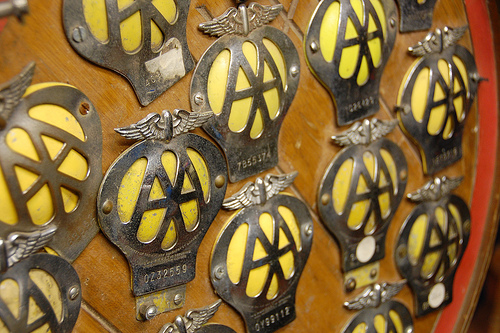
Nice emergency service, shame about the brand extrension. Image courtesy of Ruth Flickr.
The Peter Principle maintains that "in a hierarchy every employee tends to rise to his level of incompetence" in other words as long as people remain competent they continue to be promoted until they reach a level of incompetence where they stay. I think the same thing happens with businesses and brands, they continue to expand their scope of operations and to stretch their brand until they reach a level of incompetence thus threatening all the respect and love they have diligently earned over the years. In other words the brand facilitates extensions that through operational incompetence then compromise loyalty to that brand in its core operations – what is technically known as an ‘own goal’.
There are a couple of brands I have had dealings with recently that are guilty of the Peter Principle, Boots and the AA. I have enormous amounts of respect and love for both these brands – they might almost qualify as lovemarks given that both enjoy a considerable amount of loyalty beyond reason from me. Both are in a perfect position to generate additional revenue from this relationship through brand extensions because I’m kinda up for it. However, both have threatened this core relationship through the operational incompetence of a new service.
Boots is a mass-market healthcare and wellbeing retailer. Like many retailers at the moment it is facing extremely tough competition most especially from the supermarkets, so added value services look attractive because they promise higher margins than the day to day business of selling toothpaste. Hence the rapid expansion of the optical offering from Boots. Boots started to offer optical services in 1983, however, until recently it has been a very small part of their operation and they weren’t a significant presence in the market. However, in 2009 Boots acquired D&A for a nominal sum creating a real rival to market leader Specasavers and an estate of over 600 optical stores (somewhat reduced with the ultimate closure of the D&A operations). At a brand level optical services appear to make sense for Boots as it has a medical tradition through its pharmacy heritage and it’s a brand built on legendary levels of trust from consumers. And while I am not a customer by choice but because boots bought me in the D&A purchase my relationship with Boots means I am quite comfortable with taking optical advice from the brand. That is until one actually experiences the service or lack of it. The opticians themselves are still very good, they have to be as they are professionally qualified but the people and systems around them are a disaster area of epic proportions. Poorly trained staff using very poor systems compromise the service of opticians whose churn rate is so high that good opticians from round the network have to be parachuted into branches for a few days a week to stabilise the practice and the customer base. I had one delightful moment recently when I had been asked to come back for a contact lens check up in a couple of weeks by the optician but couldn’t book an appointment because the rotas hadn’t been done for that week. The operational incompetence of an organisation that is bloody brilliant at retailing but has no experience or expertise in service has compromised not only the success of the new operation but also my relationship with the core brand.
There is a similarly sorry tale over at the AA. This has not been a happy organisation since its demutualisation over a decade ago but the breakdown operation (once dubbed the fourth emergency service) is still phenomenal and while this ought to be a commodity insurance purchase somehow how for me it still isn’t. When I need help I want that yellow van and that patrolman or woman with me by the roadside – and I pay for the privilege of my brand convictions. So it must have seemed an absolute wheeze to create a home repair and servicing offering. After all they know when a repair is required because a patrolman was called out to rescue the driver and they have a gargantuan database of car owners all of whom need their cars regularly serviced. AA home repair and servicing should be a killer app for the AA and an important new source of revenue. The trouble is that the operation is shockingly poor from the first call to the call centre to the shouting match once the whole job has been botched. Again this is not a brand issue – the brand should be able to offer this service effortlessly, its an operational one – the organisation is not set up to offer this kind of customer care. The AA is an emergency service, they are brilliant at responding immediately to a breakdown and then doing just enough to get you going again if this is possible or get you to a garage and your family home if it isn’t. They aren’t about booking you in to the system a week in advance, working round your life when your car isn’t a top priority, following up on enquiries, getting back to you and all those tedious things we expect from a service organisation. Service of this sort is simply not in their blood in the way I’m fire fighters hate popping round to check your smoke alarms.
In both cases the business is operating in territory the brand facilitates but the core competencies of the organisation do not. And this ought to be a lesson to any marketing department hell bent on innovation and eagerly eyeing up its brand and its capability for stretch. For the truth is that these day’s brands are often far more flexible than the companies behind them and that often the inevitable outcome of innovation is to confirm the Peter Principle for business, that every great brand gets stretched to its level of incompetence.
A question of trust

Net A Porter, now there's a brand that gets trust. Image courtesy of Idhren
Trust is reciprocal, right?
You trust the people that trust you and you can’t possibly trust the people that don’t trust you. All of us instinctively know that but most brands and businesses, perennially autistic in their ability to understand people and human nature, still don’t get it.
Now this wouldn’t matter a fig but for one thing. Those brands and businesses seem desperate to be trusted, absolutely and tragically desperate. Hell they have started setting customer trust as a KPI. Boots even had Mother run 'Trust Boots' as their end line for a while before everyone was talked down from the ledge of lunacy and they plumped for the anodyne but fair, 'Feel Good'.
Every one wants to be trusted but no sector more so than financial services. And of course they have good reason. While no measure is more important to the very core of their relationship with customers than trust, no measure was more gleefully squandered in their orgy of fiscal irresponsibility than trust. One by one they flushed every scintilla of trust that people had invested in them down the crapper, and boy do they want it back. But they are going about it entirely the wrong way if you ask me. Because they want their customers to trust them but they are not prepared to trust their customers. And therein lies the problem. They have fundamentally and at the very heart of their businesses, forgotten that to be trusted you have to offer trust.
I have been banging on about this for bloody ages but to no avail. Financial services people just look at you blankly and mutter something about compliance, money laundering and my manifest and hopeless naivety about their business – trust customers heaven forfend, this man should be sectioned under the mental health act.
So it was a rather nice surprise to find the very same point made by Mr Guy Kawasaki in his latest book ‘Enchantment’. He was kind enough to send me a review copy, however the US post wasn’t kind enough to deliver it in time to review the book. Still I am reading it because he seems a very nice man and it’s a free book he trusted me with.
He talks about the example of Zappos, the online shoe retailer but you can see very much the same point at large ion the business model of many online brands especially the fantastic Net A Porter. Net a Porter (valued at its sale to Richemont last year at £350m) depends on a model of trust to run its business. Customers trust Net A Porter that they can return they goods free (they even send DHL round to pick the unwanted garments up) and get a refund in full if they are not suitable in any way, and Net a Porter trust their customers not to wear them once to the British Television Advertising Awards and then return them the next day. And the business model can cope with the odd person that takes the piss because that’s life isn’t it.
But can you imagine talking to a bank or insurance client about the need to show that they trust their customers by assuming that people are basically good and decent? And that they need to live with the consequences of the naughty ones and they look at you as if you have just suggested you have regular sex with animals.
I’m sorry but I don’t give a shit about the people who do want to launder money, defraud my bank or make false claims on their insurance. I don’t want to and I want to be treated that way, as a customer and not a threat. Until the day that brands and the businesses that own them are prepared to trust their customers then they do not deserve our trust.
Douglas Holt has come to save us all...again

Bureaucracy by Dan_DC.
A few years ago I wrote a post about Douglas Holt and his then new book 'how brands become icons'. The post was called 'Douglas Holt has come to save us all' and he may well have pulled this off a second time with his latest book 'Cultural strategy'.
Monumentally dull though the title is 'Cultural Strategy', which Holt co-authored with Douglas Cameron of Amalgamated fame may well be one of the most important books on advertising and branding in the past ten years.
Broadly Holt and Cameron contend that while every marketer craves innovation to provide new sources of growth for their brands and businesses, on the whole they are looking in the wrong place. For most innovation is either a functional endevour - introducing new product benefits or colonising additional markets, or else it is purely about emotional territory - owning different 'need states' or 'mindspace'. This philosophy of innoavtion is unfortunately rampant in our Client's organisations and it is rendering the big marketing companies impotent when it comes to creating the 'game changing' ideas that they desperately want and need.
Instead Holt and Cameron advocate what they call cultural innovation, which does exactly what it says on the tin. This is about innovation in the cultural rather than functional or emotional space by introducing or playing with the ideology of that brand, ideology that at best conflicts with the cultural orthodoxy of the moment. This is not a million miles away from the idea we often talk about here of brands with positions and not positionings.
For Holt and Cameron its is cultural innovation that is best able to deliver immediate and sustainable growth for brands and businesses not more and more brand extensions or SKUs. As they say in the opening chapter "The list of cultural innovations that have launched or reinvigorated businesses worth billions goes on and on: Marlboro, Coca-Cola, Levi's, Diesel, Dove, Axe/Lynx, American Express, American Apparel, The Body Shop, Target, Virgin, Pepsi-Cola, Polo, Harley-Davidson, Seventh Generation, Method, Burt's Bees, Brita, Whole Foods, Patagonia, Jack Daniels, Mountain Dew, Absolute, Starbucks, Volkswagen".
And boy is this good news for people like us. While many of the cultural innovations they talk about at length in the book are down to the entrepreneurial visions of the founders of those businesses, the second most important source of cultural innovation is advertising agencies. Advertising agencies mind, not brand consultancies, design agencies, digital agencies, research companies, innovation specialists, trend forecasters and all their fellow travelers. And that's because the raw material that Ad people work with is first and foremost ideology and the manipulation of ideological meaning.
Any regular follower of this blog will know that this is extremely sweet music to my ears and the examples Holt and Cameron give after eight years of interviewing the entrepreneurs, clients and agencies behind the most powerful cultural innovations are not simply fascinating, they given you an evangelical zeal to follow in their footsteps. If you do nothing else read the account of BBH and Levis developing Launderette, the work that followed it and why and when it went wrong.
And if you need any more encouragement to pre-order this book now you absolutely must read the chapter on brand bureaucracies, sciency marketing and the importance of creating cultural studios that collectively author the ideas and bind visionary clients, agencies and creative craftspeople together. They deliver a brilliant and withering critique of the faux-science that is endemic in our client's marketing departments and with which the research and agency world is entirely complicit. Suck on this little quote for a moment and tell me this isn't true of your agency. "Agencies are more than happy to express publicly the profound wisdom of their client's branding initiatives, but behind the scenes they subject these efforts to constant ridicule. Agencies obligingly structure their entire work production product to the beat of the client's innovation assembly line despite private acknowledgment that this structure is self defeating".
Hurrah for you, Holt and Cameron.
Nostalgia brands - what to do if you spot one

Image courtesy of NuriaGuttierrez.
There are a group of brands that face a specific set of issues and that require specific actions to help them. All too often however, they are misdiagnosed and the wrong solutions are taken to market, solutions that at best do little more than simply waste budget and at worst contribute to long term brand damage.
I'd like to dwell a little on these brands, as I think they are incredibly common and I want to help you identify them diagnose them correctly and deliver the right approach to sort the little buggers out.
I am going to call these brands nostalgia brands. And classically they are those with bags of awareness, enormous heritage, huge amounts of affection and catastrophically declining sales. Indeed when commenting about her own brand, Cadbury's Flake, one client told me that when asked about the brand in groups "everyone said they love it but no one had bought one in living memory".
If you have a brand that everyone loves but no one is buying, you probably have a nostalgia brand on your hands.
Now, it is possible that the problem is one of product performance, that the product on offer while once market defining, is now substandard in some way. You could for instance say this about a brand like Pot Noodle that shares many of the characteristics of a nostalgia brand but at its heart no longer performs and is in desperate need of radical reformulation. However, while often idiosyncratic products, real nostalgia brands still perform for people. Their problem is a perceived lack of relevance to the lives of the people that should be buying them, in other words no clear role in those lives and no clear recognition by the brand on those lives and the way they have changed. What they therefore require is the rapid injection of relevance.
We could try and map the brandscape according to love and relevance.
Brands with high love and high relevance are those with powerful customer relationships. In the Saatchi & Saatchi world these would be called Lovemarks, in WPP probably Olympic brands. Think of Marmite here, part of the very stuff of British family life and passed from generation to generation but with bags of relevance to modern life - practically it performs a powerful role in weaning children onto more adult tastes and in delivering bags of good stuff, principally vitamin B. Emotionally marmite signifies the exchange of love between family members and by extension towards yourself when in later life you spread some on your morning toast. I think Persil, Andrex and Pampers possibly all come in this category too.
Brands with low love and high relevance could be called 'just do it' brands, those that get on with the job well and are part of the fabric of our lives but for whom there is little affection. Im going got stick my neck out here and say the standard bearer for this is Tesco - no one likes then but their buying, distribution and customer data management is so powerful that they have a clear role in many people's lives (taking around one pound in every eight spent in the UK).
Let's assume non of us us very interested in brands that no one loves and have no relevance - to steal a term from Boston Consulting, these are the dogs.
Which leaves us with the clutch of brands that have high levels of love an low relevance and these are our nostalgia brands. We have been working with one recently - Walls. People absolutely adore this brand, after all it has been on British tables and served to British families for well over 200 years. And yet fewer and fewer of those families were actually buying it. Its resurrection has involved improving product performance by extending the brand into pastry products like pasties and sausage rolls but it has also been about building back the relevance that the brand had progressively lost in recent decades.
So you have identified that you might have a nostalgia brand on your hands, what next? Well here is what you must not do:
1. Don't listen to the reasons people will give in groups about why they aren't buying the brand any more. These answers will be superficial and lead you up the garden path. People would say that the reason they didn't buy Flake was because it is crumbly and messy to eat and yet it was equally crumbly and messy when the brand was selling like hot cakes. If you follow their advice you will deliver rational solutions to irrational problems and you won't get anywhere. Walls was caught in this situation before we started looking after the brand a year ago, stuck in a differentiation trap with own label and rationally slogging it out over marginal differences in product quality, exemplified by the 'two best bits' campaign.
2. Don't think that this is a problem that can be solved by another throw of the creative dice. Without a doubt your brand will require a significant lift in the quality of its creative output and this will be part of solving the problem. but the solution cannot start here, since the brand is in little need of more salience if this is not accompanied by a new role for the brand to play in people's lives that will deliver relevance. If you are an agency you must not simply hand this problem to the creative department and if you are a client you cannot simply review the business into a creative hot shop and hope for the best. You will need some proper thinking done first.
3. Don't take the lazy route out and fall back on the brand's heritage. Rover was a nostalgia car brand in the UK and its equity was based on its heritage. Unfortunately so was the styling of its cars and the communication of the brand. Think of the brand's heritage as a source of authenticity, incredibly powerful for the brand and one of the things that differentiates it from the mess of made up brands freshly minted in tedious NPD brainstorms. But do not be seduced into making it the heart of the brand's communication with its customers.
So what's the course of action?
Fundamental to solving brand problems like these is cracking how and in what way you are going to make the brand relevant to the audience's lives. I'd say this is about ensuring the brand cares about something that real people care about. That it has both position on something important to people (regular readers will note that this is a recurring theme at adilterate) and a product promise that gives the brand credibility in holding this point of view. Walls believes that families that do stuff together stick together and as proper food Walls' promise is that it fires up families to do stuff together. The key learning here is that relevance is not created executionally (though the body language of the brand can help enormously) it is created at the heart of the brand's meaning to people - does it get me and my life?
Then you can let rip with the creative department because their job is then to find the most interesting way to map the position and promise onto people's understanding of the brand and to create something that the brand, category and more importantly the consumer has never seen before. Not only is this powerful int its own right and a powerful multiplier for the media budget but it creates a moment in time for the consumer to re-evaluate what they think of the brand and change their shopping behaviour but also the start of an ongoing and far more positive conversation around the brand and its role in peoples' lives.
Simple really.
But if there is one thing to take out of this it is that these nostalgia brands have to be spotted early and as a client or strategist you take the lead in ensuring the right diagnosis is made and solution implemented.
Dynamic micro brands - Toms
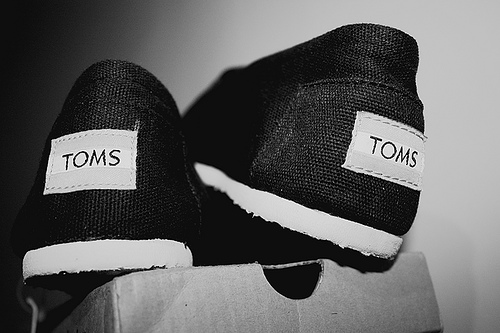
Image courtesy of StephanieNguyen
I’m a bit of a latecomer to the Toms party but then I’m not an environmental activist and I don’t live on the West coast. So I had to wait until the TED Global goodie bag to come across this brand of ethically driven footwear and mighty fine they are too.
Toms was founded three years ago by Blake Mycoskie following a trip to Agentina. Blake was struck by number of children that did not have shoes in the region he was visiting and the health problems that resulted from kids having nothing to protect their feet. One of the leading causes of disease in developing countries is soil transmitted parasites which penetrate the foot through open sores. In addition in many communities wearing a pair of shoes is a condition of being able to attend school.
While many brands and many of the dynamic micro brands that count Adliterate as a fan, have an ethical dimension, the whole premise of Toms was to provide a solution to looking after the feet of kids growing up in endemic poverty. For every pair of shoes they sell they give another pair to a child that needs one. Indeed in the last three years they have distributed 140,000 pairs of shoes in the Argentina, South Africa and the USA (most recently in New Orleans where the issues are somewhat different to developing countries). In 2009 they plan to distribute 300,000 pairs of Toms reflecting the growth and success of the brand.
We have often talked about the key ingredients of Dynamic Micro Brands (hell you could even call them Little Lovemarks if you liked). That they drip with authenticity, having a powerful and understood reason to exist. That product performance is paramount, leading advocates to believe the product to be functionally superior to their competition. And that they often have a clearly articulated idea at their heart that drives both the business and brand. Seems to me that Toms over indexes suitably on all three criteria.
Shoes are distributed on shoe drop visits by Toms’ people and volunteers and so impressed by the shoes and moved by the story that’s what I am going to help do between the 5th and 12th of December in Argentina. If you would like to help me you can donate towards my $1,800 target at here.
The summer of the comeback
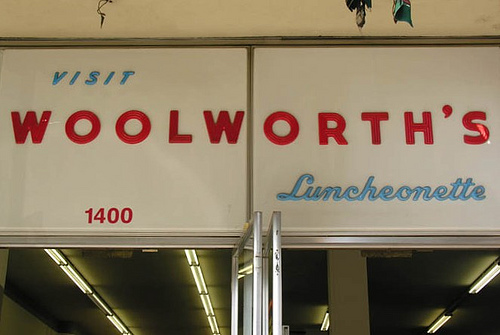
Image courtesy of Dave van Hulsteyn
This is the summer of the comeback. Blur are back, Oasis are back, Abba have been approached to take part in a tribute to Wako Jacko and Glastonbury almost saw Crosby, Stills, Nash and Young harmonise with each other once more. And just six months after Woolworths finally threw in the towel and swore never to play live again it too is back, although the performance is entirely online now.
Having bought the brand name from the receivers, Shop Direct has relaunched Woolworths online and declared, through a variety of newer and older media that it is ‘now playing’.
Now I have to admit to being more than a little bit cynical when they first announced they had bought the brand and were going to bring it back. For me Woolworths seemed a retailer that had lost the plot, lost any idea of the role it played in people’s lives and so justly lost the will to live. And its comeback seemed the worst kind of nostalgia marketing, more tribute band than legendary reunion. However, I’m not so sure now, the new Woolworths seems really rather good.
More than that, the launch comes at the perfect time, offering people sunny optimism and the comfort of a well loved brand at a time when people are feeling more than a little pessimistic. They have not only brought Ladybird children’s clothes back, they even sell pick’n’mix on the site, arguably Woolworths signature product.
And in creating an e-commerce only offering Woolworths 2.0 has resolved many of the problems that dogged the 99 year old high street retailer. Not least the effect that selling anything with a bar code on had on peoples understanding of the role of Woolies. This brand is now fairly and squarely about ‘play’ something that was always at the heart of Woolworths but that was monumentally obscured by the industrial-scale fly tipping that characterised their highstreet inventory.
Indeed there must be retail chiefs up and down the land that are green with envy that Woolworths has been able to dump their undifferentiated highstreet and out of town stores in favour of an infinitely smaller but more focused and potentially far more profitable online offering. Retail chiefs that know that they don’t have a hope in hell’s chance of following suit unless they crash the business and call in the receivers. Yet another example of how the City mitigates against bold decision-making in British businesses.
So a brand on the cusp of its centenary has been rescued form the dump bin of retail and given a new lease of life. And yet for all of this one can’t help feeling that the real wonder of Woolies has gone and gone forever. The thing that really delighted people, and especially families, about Woolworth’s extensive retail footprint and eclectic inventory was the one thing that online retailing will never be able to deliver, precisely because it has to deliver. The real spirit of Woolworths was instant gratification. Woolies really came into its own when you absolutely had to have it now not in four days time and only then if you wait in for your order to arrive on your doorstep. The real hole left by Woolworths is really the way it acted as an antidote to the need for premediatated parenting.
And spontenity is of course what e-commerce does so badly, unless the product you want can be delivered down the wire. The internet is unsurpassed at arming consumers with information, price comparisons and recommendations, but it remains prehistoric when it comes to actually getting your hands on the stuff, something that remains the enduring USP of the highstreet.
What's in a name?
It is not clear why, of all the things that might concern a business as we enter a year of economic and consumer uncertainty, changing your brand name would be number one on the list of priorities.
It is even less clear why you would want to spend a considerable amount of your cash telling the entire British nation about it, the vast majority of whom have less concern about your little endeavour than they have about the political situation in Azerbaijan. And still less why you would attempt to dress this spot of administrative deckchair rearranging as a benefit to any one except those hoping to win some cost savings from the corporate signage budget.
Nevertheless, none of this appears to have been of concern to the good people at the insurance company formerly known as Norwich Union. Their name change campaign is now coming to an end, not only having informed us of their act of brand vandalism but also having insisted that Norwich Union was a lacklustre name and that now they are called Aviva they will be far more successful. Just like the handful of celebrities desperate enough to mouth such arrant nonsense as “sometimes a name change isn’t just a name change, sometimes its a chance to show the world what you have always wanted to be”.
And so with the stroke of their pens Aviva has consigned a 310 year old brand to the corporate scrapheap. All the history, all the associations, all the good will, all the familiarity and three centuries of marketing investment. Gone.
Perhaps no one cares, though I might if I was a shareholder. You see these brand things we work with are desperately fragile, you mess with them at your peril. They can be the source of enormous commercial advantage or simply a silly name and a pretty logo. Was it really such a smart idea to change the name of Virgin Megastores to Zaavi? A deeply challenged business had the last vestige of brand advantage clinically and cynically snatched away, hastening the chilly embrace of the administrator.
Now I’m not suggesting that brand familiarity and affection alone will cut the mustard in these interesting times. A brand has to have a clear and clearly articulated role in peoples lives, you don’t need to look further than Woolworth’s sordid ending to understand that. In fact, the businesses that are disappearing first and fastest tend to brands that lack a point and offer goods and services that are available more conveniently and cheaply elsewhere.
And I’m not suggesting that a new entrant to the brandscape, whether through birth or a change of name, can’t be very successful very quickly either. The last decade has witnesses the arrival of gargantuan brands both on and offline, from Google (that WPP rates as the world’s most valuable) to Dyson.
But the issue is to create a real role in people’s lives and to do so with a fresh brand requires one fundamental and terribly unfashionable ingredient, clear product superiority. And this is what digital businesses have always instinctively understood and understood far better than the offline brands. Whether it’s an instantaneous way to purchase music, an encyclopedic inventory of books or an easy way to share video product performance has always been paramount for online brands or brands seeking to engage people online.
Advertising of any kind will need to learn that its role going forward will be to help create and dramatise these differences and not simply attempt to build brands through ludicrously expensive awareness campaigns, particularly those that are name changing not game changing.
So good luck to Aviva. Perhaps the loss of familiarity and affection won’t matter, perhaps the new name will be an overnight success and perhaps they have concocted a radically new approach to the business of insurance that will propel them into the brand stratosphere. Perhaps. My money is on this being a monumental act of corporate vanity and that it will take years and millions and millions of pounds for the business to recover.
Now that's what I call loyalty beyond reason
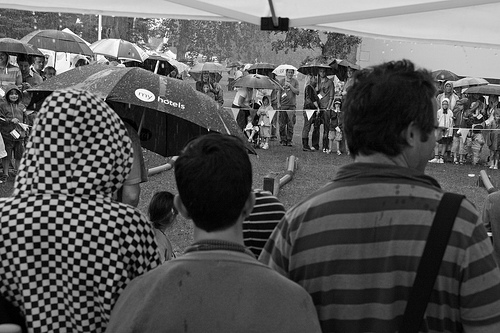
Ferret racing in the rain at this year's Innocent Village Fete in London. Image courtesy of fimb
How many companies can get thousands and thousands of people to pay £7.50 to immerse themselves in the brand's experience for a day even when it pours with rain. This brand goes from genius to utter genius.
As I please - Time to change tack on tobacco
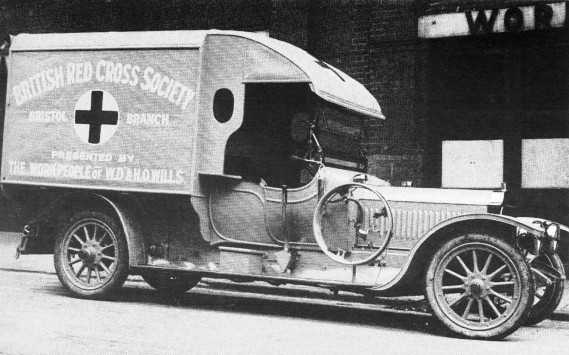
The definition of irony. A British Red Cross ambulance paid for by the workers of the Bristol cigarette manufacturers WD & HO Wills 1914-18. Image courtesy of brizzle born and bred.
As a life long non-smoker and rabid anti-smoker, no one has appreciated and enjoyed the progressive decline in smokers’ freedoms than me.
A combination of punitive taxation and escalating restrictions on the places people can smoke, as well better education and more effective quitting programmes are taking their toll on the the hardcore of smokers out there.
And hurrah for that. Britain is an immeasurably more civilized place to live and work in now that you virtually never smell cigarette smoke.
However, even I have started to wonder whether it is time to change the focus of society’s efforts at stubbing out tobacco use. Even I have begun to wonder whether we need to lighten up on those that chose to light up and to put a halt to further restrictions in the freedom that smokers enjoy.
Most anti-drugs programme attack supply not just demand and yet the vast majority of the anti-smoking effort is directed against smokers rather than the makers of the stuff themselves. Increasingly this feels like a cop out.
In any functioning market economy there are a whole array of freedoms that commercial organisations should and do enjoy. The freedom to make the products and services that they see fit, the freedom to set their price, the freedom to promote them and the freedom to establish and use 'brands' to maximise the sales and profitability of those products or services.
They are freedoms in as much that society can limit them if commercial organisations, or the sectors to which they belong, transgress the rules and codes of that society. We might call this a withdrawal of priviledges, much as you might progressively withdraw freedoms from a trucculant teenager. And this is the place we should concentrate our efforts as a society, further withdrawal of the priviledges and commerical freedoms of the Tobacco industry.
It is true that we have already withdrawn the priviledge to promote tobacco in paid for media but the the next step in attacking the supply side of the battle against smoking has to be to remove the freedom to ‘brand’ their products and thus force the industry into a commodity market.
As we preach on a daily basis commodity markets are terribly unattractive place to be and particularly in this sector which is more dependent on its brands than its customers are on the weed.
Brands create sales and generate profits by making products more attractive to people than reason of price and availability would suggest. They are a means to establish and maintain market share and to command a premium over the competition for parity or near products. As we have so often said, brands are a business person’s best friend.
And that’s what makes it imperative that the right to use brand tools is removed from this sector. Commodity tobacco with products graded according to nicotine strength will remove what little wind is left in the sails and sales of Big Tobacco. After all attacking the supply side of the business is the real front line in the battle against smoking, not maximising the number of shivering people huddling outside the office having a desperate fag.
'As I please' was the name of George Orwell's regular column in Tribune during the Second World War
Ecosystems update
 Image courtesy of Hans van Reenen
A while ago I introduced the idea of brand ecosystems. These are a group of mutually reinforcing brands, usually from different sectors that co-exist and often co-operate with a high likelihood that a customer of one part of the ecosystem will become a customer of the rest of its members.
Well I have been thinking about this a little more recently.
The prompt was a newletter from Good Energy along with my electricity bill. But interestingly the subject also came up in a client meeting this week.
I have banged on about Good Energy before as one of the collection of Dynamic Micro brands I am interested in. They are the only electricity supplier in the UK delivering 100% renewable electricity to customers and I love them - not bad given they are a power utility. Indeed you could absolutely suggest that they are a Lovemark of mine because my loyalty to them is beyond any kind of reason (they charge rather more than other electricity suppliers).
Good Energy has a very clear set of values and opinion on the world and this means that locating other brands in its ecosystem is relatively easy - they are the ones that share some or all of its values. In the case of the newsletter the two ecosystem co-habitees are Able and Cole (the organic delivery people) and Howies (the legendary clothing label from Cardigan). Both very naturally share the values of Good Energy and both take electricity from them. Able and Cole use Good Energy in their head office and distribution depot, while Howies use it in their Carnaby Street flagship store.
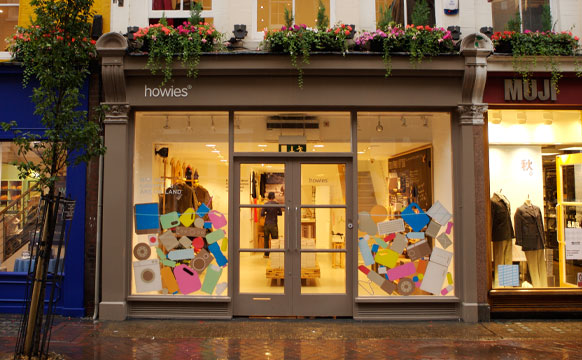
Howies' lovely and now renewably powered flagship.
These relationships are very different to the old model of brand partnerships. They were based on very rudimentary approaches like 'they make something cool it would be good to offer in a prize draw', 'they offer a platform that will help us connect will loads of people and make us more famous' or 'their customer base is like our customer base maybe we could cross sell loads of shit'.
Brand ecosystems, on the other hand are about shared values and often about co-dependence (selling stuff to each other not to each others customers). Sure they are also about shared customers but here I like the idea that they cross pollinate each others customer bases rather than cross sell to them.
In truth there was a bit of cross selling between Able and Cole and Good Energy but the reference to Howies was just a shout out on the basis of respect.
And this whole subject came up in a client meeting recently because I guess they realised that once you have a proper brand idea (an organising idea in Saatchi language) based on your position and not your positioning then understanding your natural ecosystem becomes much easier - because you know what you stand for at long last.
Perhaps it is time to map out your brand's ecosystem. Presuming that it has a set of values or point of view that makes this possible. Otherwise you are back to buying people's databases and trying to cross sell to them. Good luck.
Minnows in a world of giants
I did a panel session a few weeks ago with Russell at Promax, the annual conference and awards for the TV promotional people in the UK.
We were on the same bill (well they were on the main stage and we were in the studio) as some real giants of the media world - Will Gompertz (who heads up Tate Media), Emily Bell (the genius behind the Guardian’s mastery of the world of online journalism) and the legendary Stephen Berlin Johnson (he of ‘The Ghost Map’ and ‘Everything Bad is Good for You’ fame).
I was scared of messing up so I made some notes about the subjects we were due to cover and I thought I’d post them. They are a bit scrappy but if you are interested you will get the general drift.
1. What do advertisers still want from TV?
While budgets are slowly moving it seems to me that there are things that TV does uniquely well as a communication medium. And it's the stuff new and other media don’t do so well
Scale - Delivering big results
Speed - TV is slowing down as it takes longer to build reach but it is still pretty good if you need things to change and pronto
Spectacle and emotional depth – TV’s killer app
It is, however, important to be mindful that it’s primacy as a medium is declining. It is no longer the ultimate window onto a brand and this role will decline further in the future. Nowadays online is the only medium with the bandwidth to handle the complexity of today’s big brand ideas. And so advertisers and their agencies will become more ruthless about the specific role they are asking TV to play.
I think as a result that it will become a more tactical medium. Not that it will be full of ghastly Direct Response ads for loan companies but that it will be more purposeful. Infact thats a rather nice idea -making advertising more purposeful. In particular TV will be used a catalyst for brand change to draw a line under the past and establish new brand approaches (there is a little more on this idea here). Specifically TV will be used to start conversations that are continued elsewhere or in more intelligent interactive spaces. And of course it will continue to have a role whenever you want to build salience fast (Gorilla of course).
In addition some would argue that the dumb medium is going to get a lot cleverer particularly in the area of addressability as millions of TVs get smarter set top boxes underneath them.
2. How good is the television business in managing their own brands?
This question rather presupposes there are television brands that can be managed. The reality is that there are loads of channels but not many brands
UK TV is a bit like the privatised railway system. There are any number of Train Operating Companies all with their brand identities, brand guidelines, liveries and an obsession with painting the station lamposts in their garish corporate colours. But is Silver Link Metro a brand? Is One a brand? is First Capital connect a brand? Brands live inside people’s minds and I challenge any of these train operators to suggest their brands live in side anyone’s minds except that of the regulator.
Ditto TV.
There are a clutch of real brands out there from BBC One to Sky Sports. But there aren’t many. Not really.
I think it is partly because no one had to bother to build a brand at the dawn of UK multichannel, you paid your money, got on the EPG and Sky or whatever the cable platform was called that week, served you up as part of a package. So it made channel brands lazy.
We will find out exactly how many real brands there are when the inevitable channel crunch comes and only those channels with powerful brands survive the collapse of the revenue models that keep them afloat. And it will get particularly scary for channel brands if real brands from outside TV move into their patch - for instance Will Gompertz was threatening a Tate channel in his talk.
If this question is about the minor controversies that the BBC and Channel Four navigated their way through this year (from fixed phone in competitions to dodgy editing of royal documentaries) they will undoubtedly survive them intact because unlike much of the of the UK TV channel landscape they are real brands with huge depth and audience affinity.
3. What of the relationship between programme and channel brands/
In the long term I am not that confident about the future of channel brands. There is a real issue ahead about who the primary audience relationship is with – the programme brand and production brand or the channel brand.
Channel brands have traditionally built themselves through an intimate association with landmark programming.
But:
If I can acquire that programming from any number of sources, from itunes to the production company itself. If my only contact with the channel is the slot on the EPG where 8 weeks ago I series linked the content for my Sky+. And if content is rarely the exclusive property of an individual channel (witness the way CBBC, Cbeebies and Nick Junior share Lazy Town, the world’s most expensive Children’s TV programme) then how is this going to happen in the future?
I don’t care who has the cash to buy the latest season of Lost I just want Lost. And increasingly I am going to know who makes the stuff I like. I like HBO drama I don’t care who broadcasts it. I like RDF reality TV I don’t care who broadcasts it. I like Kudos UK drama I don’t care who broadcasts it.
Channel brands have got to do more than content distribution - for any brand to prosper they need to play a real role in our lives.
It might be instructive to look at what is happening in other areas of the brandscape where brands are becoming more opinionated and advancing powerful and engaging points of view on the world from Dove to Howies.
Maybe it is time for channel brands to have a real point of view about the world we live in.
4. What is the future for branded content?
It depends what we mean by branded content.
If we mean brands funding mainstream programming for mainsteam channels as a way to make up for the effect of on-demand services and timeshifting technology om advertising effectiveness and revenue then I can’t really see the point.
If we mean brands making content for their own channels and to deliver their own strategies then I’m very enthusiastic about it. I am particularly into IPTV at the moment and with software like Brightcove making it easy and cheap I don’t understand why every brand isn’t in the TV business right now. Frankly I think it’s the future for brands on the web.
Real branded content rather than content funded by brands gives you enormous brandwidth to immerse the viewer in the full majesty of your brand idea and the world it inhabits.
One of the best examples if Land Rover’s Go Beyond IPTV channel which is a mixture of bespoke short form content dramatising the Go Beyond idea and licenced content from brands like Discovery.
So in a way we are talking about reverse branded content where the brand sets up a conversation with its audience and uses channel content to expand that rather than the channel setting up a conversation and hoping a brand will pay for it in return for a few illegal product shots.
5. What about User Generated Content?
Forgive me for feeling a little jaded on this subject.
Its just that it’s the latest ‘new toy’ in the marketing world and brands are obsessing about it without any clear understanding of how to use it.
For consumers its big news, for brands it’s the latest new media fad – this week’s Second Life.
Its clearly useful for the TV world both in finding new programme making talent and deepening involvement in landmark content but you know all that stuff and there is little I can add to you sum of knowledge as a humble ad planner.
All I would suggest is that as with all brand oriented UGC the brand has to make the first move. It has to tell us what the idea is and why we might want to get involved. UGC is not an excuse for channel or any other brands for that matter to abdicate responsibility for having point of view.
And more and more I am far more interested in Brand Generated Content. What I mean is brands using all the tools and techniques that users now have to throw off content constantly rather than sticking to more formal content production and distribution.
These days everything a brand does is content.
Why we love Innocent
The marketing community are often accused of being rather over enthusiastic about Innocent - harbouring feelings about it that aren't perhaps shared by the wider world.
Indeed you would have been hard pressed to find people out side the North London media community at this summer's Innocent Village Fete, I even spotted James Murdoch there.
In a recent survey by Marketing Week magazine in the UK it was voted the company British marketers would most like to work for beating Google into second place (admittedly this was when the Virgin brand was broken into individual businesses).
But it's not the general loveliness of the brand, the bottles with knitted wooly hats, it's quirky (some would say cloying) tone of voice or the vans covered with astroturf that make us love it so much.
Its because it is such a shining example of the value of a brand to a business.
Recent data (again quoted in Marketing Week) shows that Innocent's share of the UK Smoothie market, which itself is now valued at £185m and accounts for 19% of the broader chilled juice category, has now reached 72% - up from 63% this time last year.
This near monopoly has been built in a category with a plethora of competitors and in which own label should be powerful (it dominates the rest of the chilled juice market after all).
And to underscore the power of the Innocent brand they have seen their closet rival PJ's Smoothies slump to a 13% share from 19% this time last year. Infact it is easy to argue that the only thing that will save PJ's from being de-listed altogether is retailers wanting some kind of action on the Smoothie Fixture rather than giving up and letting Innocent have it all (which incidentally is what seems to have happened in Co-operative stores, complete with astroturf covered chillers).
And wait for it ladies and gentlemen, all of this has been achieved with a whopping price premium. a quick check on Ocado shows that in late November Innocent is selling a litre of Strawberry and Bannana Smoothie for £3.12 while PJ can only justify charging £2.79. That is a premium of 33p per litre.
And why? Innocent have reached the nirvana of all brands - the point at which sufficient numbers of consumers refuse to substitute one product for another even though they are doing themselves financial harm in behaving like this.
At the moment there is no better example of the power of a brand to build a business (with the sole exception of the Ipod of course). So you need to forgive us for our fawning.
You might be interested in this presentation on the subject that I did a while ago - the examples are a little out of date but the main thrust is still relevant.

A tale of two retail experiences
Lots of nonsense is talked about brands.
Especially these days when the entire marketing community seems to have gone beardy weirdy, believing that cosumers and brands are now best buddies. This approach largely ignores the small issue of capitalism - the way that businesses extract a profit from the consumer.
For me the primary service a brand delivers to a business is in getting consumers to do things that are irrational and often against their best interests - to trade-off price, quality or service. If not why would a business have them?
And two retail experiences pointed this up to me in their very different ways - Wholefoods Market and Ikea.
The UK has just got its first proper Whole Foods Market in the old Barkers building on Kensington High Street.
Now I know the Americans amongst you have all gone cynical and sniffy about Whole Foods Market. Claiming that the firm has sold its hard core organic roots short and dismayed at the shenanigans of its founder who has a habit of anonymously slagging of competitors on analyst's discussion boards.
Well you'll find no such cynicism from this quarter. This is the best supermarket in the UK period.
Nowhere else demonstrates the one thing you really want from a food retailer - a real love of food. Sure there are a few food halls in poncey department stores but they are far more likely to be places you buy a stilton at Christmas or a tub of gentleman's relish for a favoured uncle than the destination of your weekly shop.
Its not just that the food is good, it is the way in which it is cared for and merchandised that marks Whole Foods Market out both from your bog standard Sainsbury's, Tesco or Waitrose and from the organic retailers like Fresh and Wild (which Whole Foods Market also owns). Eggs are sold individually with you choosing the ones you like the look of to put in your egg box. Cheese has its own temperature controlled room. The Sausages are made on the premises and then sold form their own humidor. The bakery is a bakery and not a bit of 'retail theatre'. And even the canned food is merchandised with a flair that seems to escape the ghastly sheds that dominate UK food retailing.
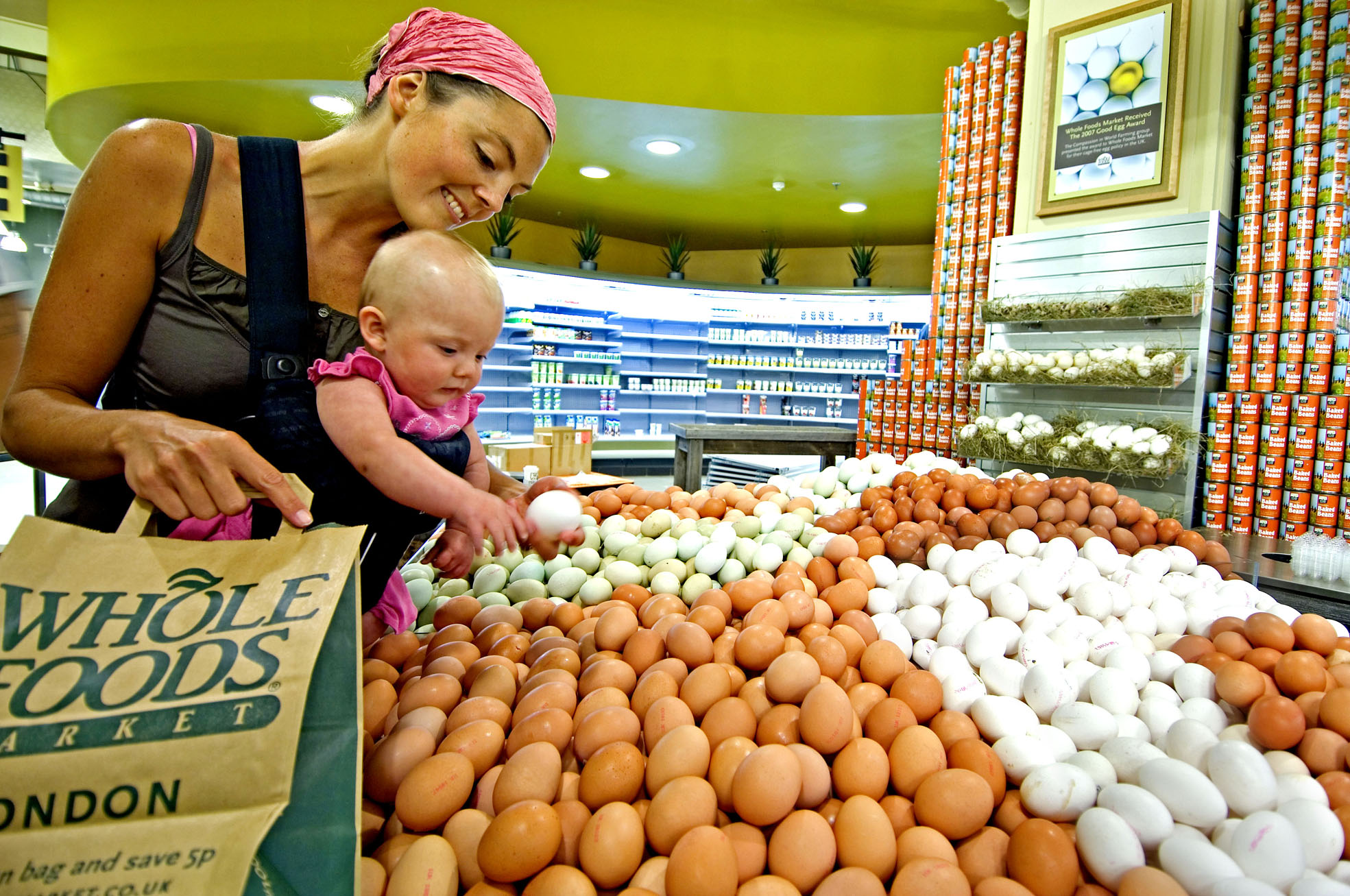
See what I mean about the eggs
Of course there is a price. And its the price.
Not for nothing is Whole Foods known in the US as Whole Pay Paket where even the well healed of Northern California wince at the checkout. Like most great brands Whole Foods Market are able to establish and maintain a price premium over the competition because the brand (and I am using the term to include both the tangible and intangible mainfestations of the consumer experience) gives them the strategic freedom to ramp up price and still keep the cash tills ringing. Thats what I call price elasticity.
The day after my visit to Whole Foods market I dropped in on Ikea in Wembley. Of course with Ikea there is no price premium in return for access to the brand - its more like your dignity they are after.
What continues to impress me about this retailer is the frenzy of slobbering desire that they manage to whip-up in people by the time they reach the checkouts. Sure some of the design is nice but the excitement that led to rioting when their Edmonton store opened is really all about the price. Ikea isn't just cheap, Ikea's prices defy the very laws of physics.
But as you will all be familiar with access to these prices comes from enduring a retail experience that is entirely on Ikea's terms - there are more rules in Ikea than in test cricket.
The whole thing reminds me of Eddie Izzard's letter from St Paul to the Corinthians "Don't do this. Don't do that. Don't put socks in a toaster. Don't put jam on magnets".
A bit of Eddie for light relief.
Both retailers are extracting value form the consumer but in almost diametrically opposite ways. Whole Foods says this is the product and experience but if you want it you have to hand over your cash (which is excatly the same as when we buy an iPod or an Innocent smoothie). Where as Ikea says this is the price but if you want it you have to put up with an experience engineered to require minimal effort on the part of the retailer. That's why many people have too leave a period of years between Ikea expeditions - they are so drained by the process.
And that is what powerful brands deliver for businesses - a preparedness to endure something about the mix of price, service or quality that is anything other than optimal for the consumer. And in that preparedness to act irrationally is the potential for profit. Something that both Whole Foods Market (with twice the profit per square foot of any other US supermarket) and Ikea (despite recent UK wobbles) know alot about.
So many channels but how many brands?
I found this data on Ofcom's website (the long winter nights simply fly by in the Huntington household). It got me to thinking how many real brands there are in the multichannel universe since it asks people in multichannel homes which channel they would chose if they could only have one (as good a definition of a brand as any). Clearly there will be a long tail but interesting that the big boys still rule (even the last gasps of ITV1). Note also the performance of Sky Sports - as many 16-24s would take Sky Sports as Channel 4.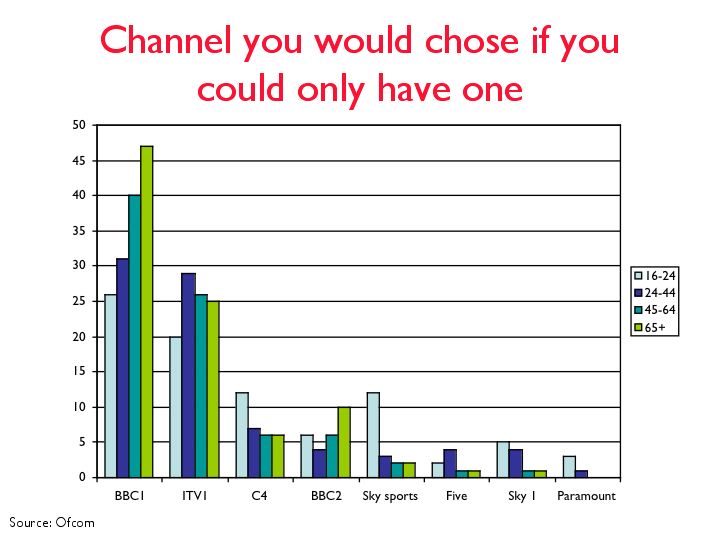
Here come the meme doctors
People have talked about the value of the meme concept in advertising for a while. I like to think I have gone that bit further, suggesting that we substitute memes for the brand concept wholesale.Here come the meme doctors
This paper acknowledges the power of the brand concept for marketing in particular and business in general. However, it suggest that we have so abused the idea that the term ‘brand’ is no longer of practical use. Thankfully the emergence of memetics and the idea of memes provides an ideal replacement and one that more adequately prepares us for a future in the meme laboratory.
The weaknesses of the brand concept
The brand is the single most powerful marketing idea.
As the collected attitudes towards and experiences of an organisation, product or service it represents the key to differentiation in today’s confused and overcrowded marketplace.
Our competitors can copy our product formulations, service innovations or structures and processes but they can’t nick our brand - those attitudes and experiences are not easily transferable. And if there is something that consumers want that we have and the competition doesn’t (and can’t easily copy) then we are well on the way to creating effective monopoly conditions - and the financial benefits this represents for any organization.
One of the best examples of this is Levi’s. For enough people in Europe the potency of the Levi’s brand means that other jeans cannot be substituted for Levi’s - they do not represent acceptable alternatives. As such Levi’s has created monopoly conditions in that marketplace and can proceed to push up prices and push down retailer margins. Indeed so powerful is their brand that they can also afford to put a brake on advertising expenditure creating a three way boost to profits.
What a wonderful thing the brand is whether you are a Marketing or Financial Director.
There is just one problem - its bankrupt currency. So weighed down with baggage is the term, and indeed the concept in general, that it has ceased to be of much practical use. Either the brand concept requires a radical repositioning or its time to replace it with something new.
What went wrong?
We confused and abused the brand through misunderstanding and short term gain.
Fundamentally we neglected the fact that brands do not belong to us and do not reside in the HQ’s of organizations but rather exist only in the minds of consumers. This has lead to a number of assumptions that are counter-productive and have effectively neutered the power of the brand.
We got confused about products and brands believing that they were one and the same thing. We forgot that brands are the perceptual halos around products, services and organisations not the products themselves. We used the term brand to apply to all the products in our portfolios even new products which self evidently can’t have brands since consumers have no understanding of them.
Crime of crimes we developed the idea of brand equity which we could ultimately apply a monetary value to and started to believe that this would allow us to trade brands - brands don’t belong to us and so it is ridiculous to believe that we can buy and sell them.
We developed long lists of what we called brand values which were entirely aspirational and bore no resemblance to the way people really felt about the products we sold.
We invented a strand of communications called brand advertising, which in claiming it alone had a bearing on brand perceptions marginalised the brand, alienating it from the real business concerns of most clients. Just mention the word ‘brand’ to many retailers, for instance, and they develop a nervous tick.
We also believed our own publicity, that the futures of the brands associated with our products are under our control rather than understanding that we only have the power to influence the development of brands.
We have lost sight of what a brand is and is not and what they can and can’t do for us. As a term it therefore means different things to different people - hence the reason it has ceased to be of real value.
This is not to say that the concept of the brand is redundant, just that the terminology with which it is associated no longer serves its purpose.
The preservation and growth of the brand concept into the future and the demands placed on those who seek to use it in the service of business demands an new vocabulary devoid of the baggage that currently weighs it down.
Fortunately there is already a such a concept that exists that is perfect for the task - the meme.
What is a meme?
The best way to understand the concept of a meme is to see it in the light of the function and behaviour of genes. Indeed it was a biologist, Richard Dawkins, who first coined the term in his 1976 book ‘the selfish gene’. Just as genes transmit biological information from one human to another, memes transmit ideas and beliefs from one human to another. So in short a meme is a unit of cultural transmission and memetics describes the process of cultural evolution.
And if the body is created from and in turn replicates genes, the mind is made from and replicates memes. This idea of replication is essential to the meme idea, or to be fair the meme meme. In Dawkins paper ‘the Viruses of the mind’ he takes this further seeing memes as behaving like viruses. He uses the concept to launch a stinging attack on his bete noir - religion - but it is also helpful to us. If memes behave virally that says something very clear about the mode of transmission, the way they infect the mind and the way that they poison the territory of the mind against other ideas or memes.
So how does this affect marketers and the cherished concept of the brand.
Any idea, belief or attitude is a meme. Consequently the halo of such attributes that we are used to calling the brand is essentially a meme. All products, services or organisations therefore have memes with some stronger than others and therefore better at transmission, replication and defence from competitive memes.
The key to success for any product is to launch into the world - and remember it is purely a world of minds - a powerful meme about itself. The initial catalyst may well be advertising but the measure of its power is that it becomes in large part self replicating, that consumers spread and augment it themselves.
Returning to jeans we can see that both Levi’s and their main mainstream competitor - Wrangler - have memes. Levi’s meme is about originality and to a certain extent accessible individuality, Wrangler’s is very much less clear but essentially its about authenticity. However, the Levi’s meme is considerably more potent than that of Wrangler. As such it is better at transmission from mind to mind and, critically, in making life tough for the Wrangler meme which finds minds vaccinated against it by the Levi’s meme. In a mind where the Levi’s meme has taken up residence any other jeans meme is either seen as irrelevant or as a blatant me too.
Why memes are better than brands
Notwithstanding that my contention was that the term brand was problematic rather than its concept, thinking about products having memes rather than brands has a number of clear advantages.
Its new terminology and as such has a reasonably clear set of definitions. We would all know what each other was talking about because we would all have learnt it from the same origin.
It makes it clear that the place these ideas reside is the human mind not the balance sheet or the marketing department
It better shows the nature of transmission of brands. That it is essentially viral and dependent on consumers not advertising or other forms of communications. These can provide meme catalysts and help shape its development but they are meme shepherds not the sheep themselves. It is clear that the catalyst for the Tesco meme was new stores and ads but its success has been in the way it has been self replicating in customers minds.
It helps us see that all communications add to the meme pool and that there aren’t specific channels that do this at the exclusion of others
But most important is what it says about the function of marketing departments and their agencies in the future.
Why we should all become meme doctors
If the world of genetics has doctors or scientists who manipulate genes to their own ends then on the world of memetics their should be a equivalent role. If we have given up the antiquated position of brand guardians or worse brands owners as I have argued, then this is a logical occupation to assume.
Meme doctors invent new memes or versions of existing memes believed to be more powerful and more successful that those at present. We might see the ‘very nice man’ meme for the AA as a once powerful meme that had lost its potency particularly in the face of the ‘new knights of the road’ meme from the RAC. A spot of reengineering by the meme doctors and the devastatingly successful 4th emergency service meme was released into the world.
Meme doctors also inject new attributes into existing memes so that they don’t loose their potency and also try to ensure that they are not corrupted by the very minds that they infect.
But meme doctors do not believe that they have the power of life or death over the memes they create and they know that the key to success is self replication not wacky ads or new packaging alone.
Creating responsible desire
This is some thinking I did about ethics and advertising around the beginning of the decade. It lead to the idea that in order to promote sustainability (the ultimate aim of any business) advertising has to find ways to create desire more responsibly. This paper tries to explore the issues that surround this idea.Responsible desire – creating more ethical advertising
“Business has become the most powerful institution on the planet. The dominant institution in any society needs to take responsibility for the whole.”
William Willis Harmon, Co-Founder of the World Business Academy
Ethics and the idea of ethical advertising have recently become an extremely hot topic in the advertising industry. The whole issue has captured peoples’ attention both for personal (doing some good for our consciences) and professional reasons (doing some good for our bottom line as well as our Clients’). However, there are a wide variety of interpretations of what this means and how committed individual people are to the idea.
This paper is intended to help you explore a more ethical approach to advertising by providing a better explanation of the subject.
What the hell does ethical mean?
One of the key issues here is that ethical is such a subjective term – what is ethical to one person may not be to another. Moreover the concept of what is ethical is not fixed in stone – for example it used to be thought ethical to advertise cigarettes but not condoms however, these days the position has completely reversed.
The reality is that ethical is not an absolute term and the word ethics, strictly speaking, merely means the moral code by which someone decides right from wrong and is therefore highly personal.
That said, the term ethical has acquired a very specific meaning over the recent past. When we use the word ethical we mean an activity that doesn’t do harm. For example the term ethical investment fund implies that money will not be invested in companies that cause harm to people, animals or the environment.
In a sense then ethics really boils down to respect. Ethical people, ethical companies and ethical activities show respect for the world around them and are aware of the consequences of their actions upon others. Contrast the respective reputations of both Esso and BP both of which are engaged in the same industry. Esso is currently subject to a global consumer boycott because its denial of climate change is seen to show enormous disrespect to the environment and the people of earth. BP on the other hand is seen as more ethical because they show increasing respect for the world beyond the boardroom table and the oilrig.
What should we respect?
Clearly the concept of ethics becomes a little unmanageable if you are watching out for ‘all things bright and beautiful’. Fortunately there is now a really easy way of understanding what you need to respect in order to be more ethical.
This is the idea of the triple bottom line.
Traditionally the business world has operated with one bottom line – the profitability and financial sustainability of the company. However, the concept of a triple bottom line suggests that this is an oversimplification since the sustainability of a business depends on more than profitability alone.
The three components for a company’s triple bottom line are:
1 Profitability – respect for a business’ effect on the economy
2 Social responsibility – respect for a business’ effect on society
3 Environmental responsibility – respect for a business’ effect on the environement
In other words, for a business to be sustainable it needs to generate a profit, not harm society and not degrade the ‘natural’ capital (the earth’s resources) that it requires to function.
What the hell has all this got to do with advertising?
Because advertising is guilty of a lack of respect.
The advertising industry has rarely looked beyond the immediate success of its work and the profitability of individual agencies. It has tended to operate in a vacuum with its only responsibility being to the Client’s marketing objectives.
Sustainability, either of the advertising industry or its Client’s businesses has also rarely featured in the consciousness of agencies. Selling today is of paramount importance not respecting people or the environment so that you can also sell tomorrow and the day after that. For all the rhetoric about building long-term brands advertising is riddled with short termism.
In short advertising has lacked respect for the wider world. And people in the advertising industry have traditionally seen it as ethically neutral. Witness the way advertising people used to justify the continued advertising of tobacco in the face of overwhelming opposition. The argument went that it wasn’t for the advertising industry to decide what was right or wrong, that was the job of governments. As long as tobacco was a legal product, people in the industry argued, we should be allowed to advertise with impunity regardless of the harm it was doing to people.
And there is the small issue of sanctioning strategies and creative ideas that manipulate consumer desire by making people deliberately dissatisfied with what they have and with their lives. Think, for instance, about the way insurance companies scare the living daylights out of people in order to sell them a policy or the way that the relentless advertising of expensive trainer brands to children has helped fuel the increase in playground bullying.
Its not that advertising people are bad people hell bent on making the world a worse place but that we don’t take responsibility for our actions and we don’t respect anything but our client’s immediate business success and our financial bottom line.
So what?
Well for starters there is your own sense of self worth. In a recent Gallup poll advertising was ranked 43rd out of 45 professions based on ethics and honesty. While for many of us advertising is a stimulating and rewarding way to make a living, it is also increasingly criticised. At best people think our work is entertaining if trivial at worst many despise what we do and to a certain extent we only have ourselves to blame. Is it any wonder people think you and I lack integrity and honesty when we have treated these values with so little respect?
The bizarre thing is that it would be hard to find a group of people anywhere in Britain that are as bright, creative and and well intentioned than the people you tend to meet in the ad industry. If for no other reason than personal pride you should engage in the debate on ethics in advertising.
It is time that we all recognise the powerful influence we have both intentionally and accidentally on our economy, society and environment and behave in a more responsible manner. At one level we need to ensure that our work never does harm by respecting the unintentional consequences of our actions. At another we need to start to harness that power to do some good – not only to make our clients more profitable but to make our society happier and more cohesive and our environment healthier and more sustainable.
Isn’t this the longest suicide note in advertising?
The idea of ethics in business is not a flight of fancy. It is all part of a powerful new agenda with in the business community and a topic of constant discussion around the boardroom table. Whether its called corporate social responsibility or business ethics there is a sea change happening in the way that businesses regard their roles with in society. As Sir John Brown, CEO of BP maintained “these days businesses have to be a positive force for good” and this from an oil man!
For instance the FTSE4good monitors the performance of companies that comply with a series of ethical benchmarks that precisely match the elements of the triple bottom line. The very existence of the FTSE4good is proof of just how seriously business is taking the issue. Not least because they have to as by law all pension funds now have to disclose whether they are taking in to account environmental and social issues. And these days many fund managers threaten to vote down the annual accounts of any FTSE 100 company that does not include an environmental report.
The long and short is that while it may not have reached the marketing department yet but all of the issues that we have raised here are being discussed within Clients organisations.
Increasingly business believes that good is good.
What is the answer?
There is a future in which more ethical advertising builds brands that behave more ethically and I call this the creation of responsible desire.
Responsible desire is the idea that though we are still in the business of creating powerful desire for our client’s brands we have to start doing this responsibly. If for no other reason this is because we want to go back to people and create the same desire year after year without hindrance either from regulation or consumer rejection.
Responsible desire is a new way that we think about the way advertising works and a way of developing challenging and engaging strategies and creative work. Above all responsible desire is about better work and more successful clients.
Applying responsible desire to your work
There seems to be a general interest in making advertising and marketing more responsible but when it comes down to creating work few people seem clear on what is expected of them.
There are two ways to approach responsible desire.
1) Not doing harm
At a basic level creating responsible desire is about being aware of the unintentional consequences of the advertising you are creating.
Is there anything about ads, the idea, their casting, the dialogue or even the media plan for instance that is likely to show a lack of respect to people who will see it? For instance every time that an ad is played out that suggests that the average Briton is white, all men are incompetent and all women are interested in the quality of their wash we do harm.
Its important to understand that this is not about creating bland advertising that is uncontroversial or is overflowing with lowest common denominator political correctness. Responsible advertising can be controversial especially when it is exposing the lazy conventions of the rest of our industry and the many advertising and marketing conventions that people never question.
The easiest way to approach responsible desire is simply to be aware of the unintended consequences of the ad you are making and doing something to prevent this. The majority of advertising that does harm does so out of laziness not intent.
2) Doing good
The second approach is a little more fundamental. It involves harnessing the power that brands and advertising has to do some good.
This is a far more challenging area because its about how the client presents their product or service to the world and requires the client to be far more engaged in the concept of responsible desire.
Let’s take strategies first. Here responsible desire is about creating and manipulating brands so that their appeal is wholly or in part because of the ‘good’ that they do or the respect that they show the world around them.
Of course some client relationships don’t always allow for such fundamental influence on the brand strategy but they usually allows us to create work that exhibits responsible desire.
For instance, at hhcl we have always rejected the sort of advertising that promises a Client’s products will give its customers a better and more fulfilling life – so called image advertising.
When it comes to developing creative work responsible desire can be about ensuring that you aren’t using dishonest or misleading techniques to sell the brand in question. It is clumsy manipulation that most increases consumer cynicism towards the work we do.
The historic hhcl advertising for Egg for instance challenged the cynicism consumers have about financial services advertising by overtly attacking the techniques that these brands use to communicate with customers. We exposed the claims and stereotypes that they use to peddle their wares in ads like token black man (which won a Council for Racial Equality Award for its troubles).
Responsible desire can also be more directly concerned with society and the environment, using these as central to the creative idea.
In the past hhcl’s work for Fuji used the opportunity that photography presents to challenge stereotypes and preconceptions. While our work for Homepride cook in sauces dramatised the authenticity of the product by using ethnically diverse British families.
Both were engaged in fostering greater cohesion in our society by representing its diversity and the need to accept difference.
What about greenwash?
Greenwash is the essentially ethical spin. It is where companies present themselves as ethical without any, or at least a commensurate, change in their behaviour. It is vitally important that you avoid greenwashing clients and so like all advertising it is our responsibility to ensure that any strategy, creative idea or execution is credible.
So should you just handle ethical clients?
It is the responsibility of all businesses to address the ills on their doorsteps, to look at their sectors and clean up the harm that they do. The concept of responsible desire is an attempt by an advertising and marketing communications agency to reform advertising and marketing. It is not an attempt to reform business as a whole and it is not our responsibility to try and do this.
Of course I believe that businesses that build more ethical brands using more ethical means will be the long term winners and people in our industry should want to be a part of the success of any organisation that is engaging with this process. More than that responsible desire is about elevating the debate on ethics beyond one of risk management towards one of demand generation because brands that do good should use this as way of building business – after all trust is the bedrock of all brands.